Getting a tourist visa rejected can be frustrating, especially when you’ve already spent time preparing documents, planning your trip and looking forward to travelling. The good news is that a refusal doesn’t always mean you can’t travel in the future.
In many cases, the refusal comes down to whether the visa officer is satisfied with the purpose of the trip, the information provided, the supporting documents and the applicant’s overall circumstances. The exact requirements vary by country, so the refusal letter or decision notice should always be your starting point.
If you’re wondering why tourist visas get rejected, the most useful thing you can do is understand the reason for the refusal before submitting another application.
What Are the Most Common Tourist Visa Rejection Reasons?
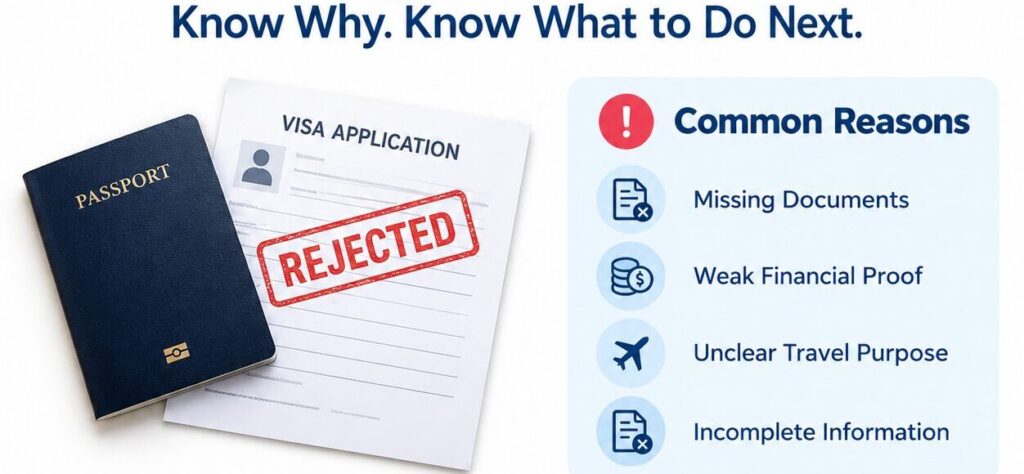
Tourist visa applications can be refused for several reasons. A weak application isn’t necessarily about one missing document. Sometimes, the information across the application simply doesn’t form a clear and convincing picture of the proposed trip.
Here are some common tourist visa rejection reasons:
- Unclear or poorly explained travel purpose
- Insufficient supporting documents
- Inconsistent information in the application
- Concerns about the applicant’s intention to return
- Financial evidence that doesn’t adequately support the proposed trip
- Previous travel history that raises questions
- Missing or unsuitable documents
- Information that cannot be verified or appears unreliable
- Failure to meet the specific visa requirements of the destination country
For example, Schengen visa rules specifically identify inadequate justification of the purpose and conditions of the stay, insufficient means of subsistence, unreliable information and uncertainty about the applicant leaving before the visa expires as possible grounds for refusal.
The important part is this: don’t treat every refusal as the same. Your refusal notice should tell you what the decision was based on.
1. Unclear Purpose of Travel
One of the first things a visa officer needs to understand is why you are travelling.
If the application says you are travelling for tourism but the itinerary, accommodation details or other information doesn’t clearly support that purpose, questions can arise.
A good tourist visa application should tell a consistent story:
Why are you travelling? → Where are you going? → How long will you stay? → What do you plan to do? → How will the trip be supported?
You don’t need to create an unnecessarily complicated itinerary. In fact, keeping your plans realistic and easy to understand is often better.
2. Incomplete or Weak Supporting Documents
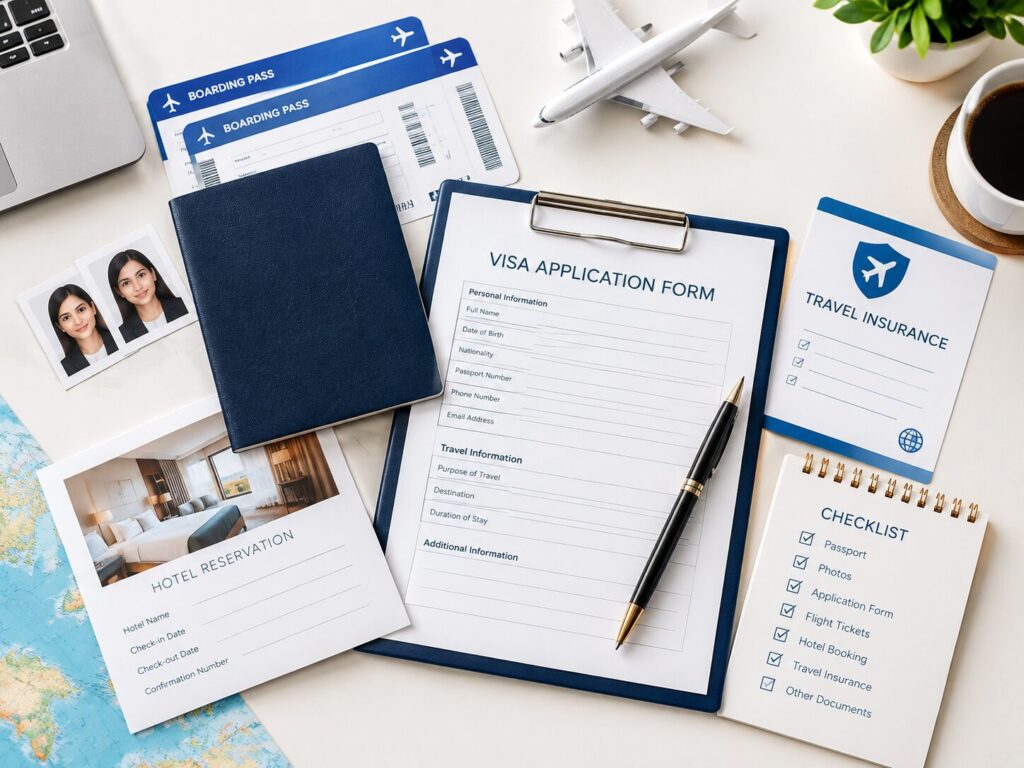
Documents are there to support what you’ve stated in your application.
If important evidence is missing, unclear or doesn’t match the information in your application, the officer may not have enough information to make a positive decision.
This is why simply submitting a large number of documents isn’t necessarily helpful.
The better approach is to provide relevant, genuine and consistent documentation that supports the specific requirements of the visa you’re applying for.
3. Financial Evidence Doesn’t Support the Trip
Another common issue is whether the applicant has demonstrated that they can reasonably support the proposed visit.
This doesn’t mean that every tourist visa has the same financial requirements. Requirements vary depending on the destination and visa category.
What matters is whether the financial information you provide is credible and appropriate for your circumstances and planned trip.
If your application contains financial information that doesn’t make sense alongside your travel plans, it may create additional questions.
4. Concerns About Returning Home
For a temporary tourist visa, the destination country’s authorities may need to be satisfied that the applicant intends to leave when the permitted visit ends.
This is particularly important for applications where the applicant’s circumstances don’t clearly establish the temporary nature of the proposed trip.
Your circumstances, employment, family situation, previous travel and other relevant evidence may form part of the overall assessment, depending on the country.
For example, U.S. visitor visa decisions can consider an applicant’s circumstances, travel plans, financial resources and ties outside the United States when assessing whether they are likely to depart after a temporary visit.
5. Inconsistent Information
Small inconsistencies can become a bigger problem if they affect important parts of the application.
Your application form, supporting documents, itinerary and answers during an interview should tell the same basic story.
Check details such as:
- Travel dates
- Purpose of the trip
- Accommodation
- Employment information
- Previous travel history
- Personal information
- Who is supporting the trip
Before submitting an application, read everything together rather than checking each document separately.
Sometimes an inconsistency becomes obvious only when you look at the complete application.
6. Previous Travel History May Raise Questions
Previous travel isn’t automatically a problem.
However, visa officers may consider an applicant’s travel history as part of the wider assessment. Previous immigration issues, overstays or information that doesn’t match the current application can require further explanation.
The safest approach is always to provide truthful information and disclose relevant details where the application requires them.
Never assume that leaving something out will make an application stronger.
7. Applying With the Wrong or Incomplete Information
Visa applications are not the place for guesswork.
A form should be completed carefully using accurate information. Supporting documents should also be checked before submission.
If a destination country has specific document requirements, follow the official guidance for that particular visa category.
This is especially important because tourist visa requirements can differ significantly between countries.
What Should You Do After a Tourist Visa Rejection?
The first step is not to immediately submit another application with the same information.
Start with the refusal.
Read the decision carefully and identify the exact reason or reasons given. Then compare those reasons with your original application.
Ask yourself:
- What specifically concerned the visa officer?
- Which documents supported that part of the application?
- Was anything missing or unclear?
- Did the information across my documents match?
- Has anything genuinely changed since the previous application?
- Can I provide stronger evidence this time?
This process matters because simply reapplying without addressing the previous concern may not solve the underlying problem.
For Schengen applications, a previous refusal does not automatically result in refusal of a new application. A new application is assessed using the available information, and applicants can reapply after a refusal.
Can You Reapply After a Tourist Visa Rejection?
Yes, in many cases you can reapply after a tourist visa refusal, but the procedure depends on the destination country and type of visa.
There isn’t one universal waiting period that applies to every tourist visa.
Before deciding when to reapply, check the refusal notice and the official requirements for the country you’re applying to.
More importantly, don’t reapply just because time has passed.
A stronger reapplication should address the reason for the original refusal. If nothing relevant has changed and the same concerns remain, submitting essentially the same application may not be the best strategy.
For U.S. visas, for example, applicants may reapply after certain refusals, but the Department of State advises applicants to provide additional evidence or show relevant changes in circumstances where applicable.
How to Improve a Tourist Visa Application After Refusal
Once you understand the refusal, work through the application again from the beginning.
Review the refusal letter
Don’t focus only on the word “refused.” Read the specific grounds and instructions carefully.
Check every supporting document
Make sure documents are relevant, current where required and consistent with the information in the application.
Make your travel purpose clear
Your itinerary should make sense for a genuine tourist visit. Avoid unnecessary complexity.
Explain relevant changes
If your circumstances have changed since your previous application, make sure the new application accurately reflects those changes and provides appropriate supporting evidence.
Check for inconsistencies
Compare the application form with your documents before submitting anything.
Follow destination-specific requirements
Visa rules differ between countries. A document that is useful for one destination may not be required for another.
Should You Change Your Travel Plans After a Visa Refusal?
Not necessarily.
Your travel plans should be realistic and consistent with the purpose of the visa.
If you genuinely want to visit a destination for tourism, explain the trip clearly rather than trying to redesign the entire application simply to make it appear stronger.
For travellers planning a holiday, working with travel agents in Patiala can also help with organising the travel side of the trip and understanding what information needs to be prepared before moving forward.
If you’re planning a family trip, you can also explore family vacation packages to organise the holiday after your travel documentation is in order.
For international travel, international tour packages can help you explore different destinations and travel arrangements.
Tourist Visa Refused? Don’t Panic and Don’t Rush the Reapplication
A visa refusal can feel like a dead end, but it isn’t always one. The most productive response is to understand exactly what went wrong and deal with that issue before applying again.
Think of the refusal as a signal that something in the application wasn’t sufficiently demonstrated to the visa authority. Your job is to understand what that issue was, check the official requirements and prepare a more complete and consistent application where appropriate.
And remember, there is no universal formula for getting a tourist visa approved. Decisions are made according to the destination country’s rules and the individual circumstances of the applicant.
How Alipuria Travels Can Help With Your Travel Planning
If you’re planning an international holiday from Patiala, Alipuria Travels can help you organise the travel arrangements around your trip.
Whether you’re planning a family holiday, honeymoon or international vacation, it’s useful to sort out your travel plans carefully before making commitments.
You can also explore Thailand tour packages, honeymoon tour packages or other international tour packages depending on your travel plans.
The key is simple: understand the visa requirements first, prepare accurate documentation and make sure your proposed trip genuinely matches the visa you’re applying for.
Frequently Asked Questions
1. What are the most common tourist visa rejection reasons?
Common reasons include an unclear travel purpose, insufficient supporting evidence, inconsistent information, concerns about returning home and failure to meet the specific requirements of the destination country.
2. Can I reapply after a tourist visa rejection?
In many cases, yes. However, the rules depend on the destination country and visa type. Before reapplying, review the refusal reason and address the issue identified by the visa authority.
3. How soon can I reapply after a visa refusal?
There is no single waiting period that applies to every tourist visa. Check the specific instructions provided with your refusal and the current requirements of the destination country.
4. Does a previous visa refusal affect a new application?
It can be relevant, but a previous refusal does not necessarily mean your next application will be refused. For example, Schengen rules state that a previous refusal does not automatically lead to refusal of a new application.
5. Can I apply again with the same documents after a visa refusal?
You can submit another application where permitted, but simply repeating the same application may not address the reason for refusal. Review what was missing, unclear or unconvincing and make appropriate changes.
6. Why was my tourist visa refused even though I submitted all the documents?
Having many documents doesn’t automatically make an application successful. The documents must be relevant, reliable and consistent with your stated travel purpose and circumstances.
7. Can inconsistent information cause tourist visa refusal?
Yes. Contradictions between an application form, supporting documents, itinerary or interview answers can raise concerns about the reliability of the information provided.
8. Can travel agents in Patiala help after a visa refusal?
A travel agency can assist with travel planning and help you organise information and documentation for the travel process. However, visa decisions are made by the relevant government or visa authority, not by a travel agency.
9. Should I change my destination after a tourist visa rejection?
Not automatically. First understand why the visa was refused. If your genuine travel plans remain the same, focus on addressing the actual concern rather than changing destinations simply to make another application.
10. How can Alipuria Travels help with my international trip?
Alipuria Travels can assist with travel planning and arrangements for international holidays. Depending on your requirements, you can explore international tours, family vacations and honeymoon travel options before finalising your trip.
Plan Your Next Trip With Greater Confidence
A tourist visa refusal doesn’t have to stop your travel plans permanently. Take time to understand the decision, check the destination’s current requirements and prepare your next application carefully.
If you’re planning a trip from Patiala and need help arranging the travel side of your holiday, Alipuria Travels can help you plan the journey around your destination and travel requirements.